
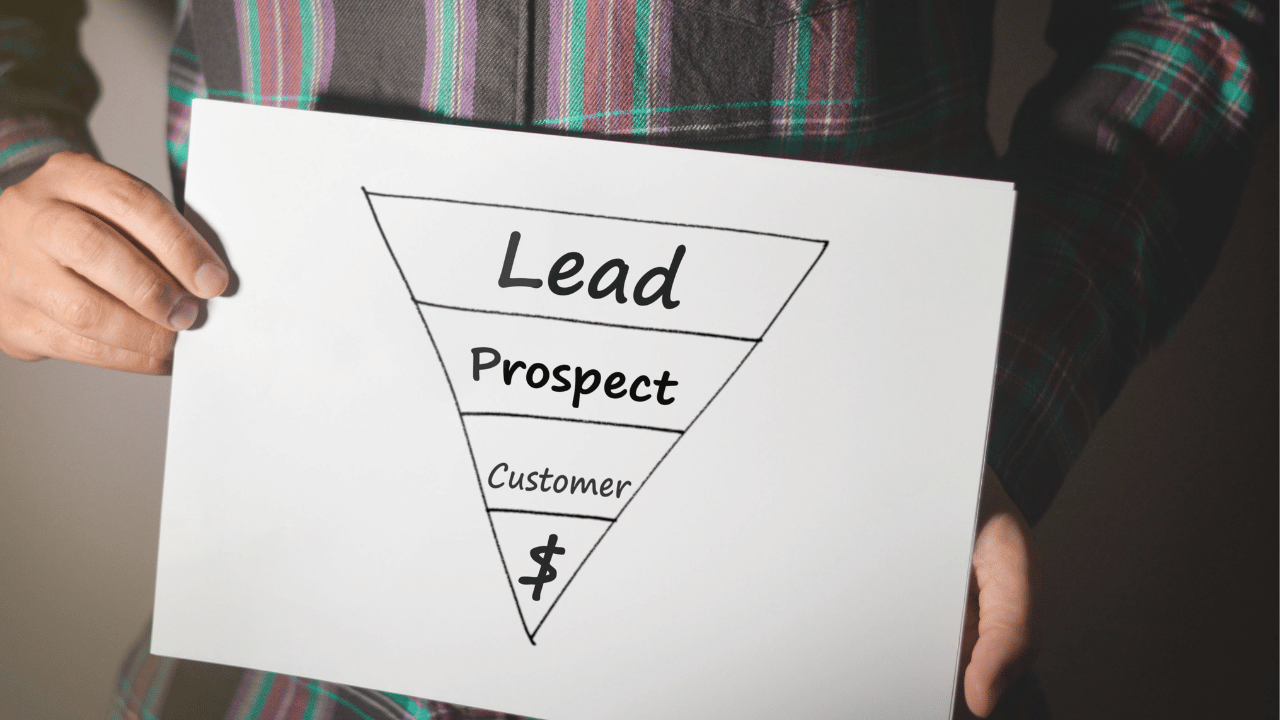
A lot of local businesses think they have a Sales Funnel because they have a website.
That’s like saying you have a “restaurant” because you own a microwave.
A real Sales Funnel is not a landing page. It’s not a fancy tool. It’s a relationship journey that moves people from “Who are you?” to “You’re my go-to forever.”
And here’s the big mistake: most local service business owners try to run ads, post on social, and “do SEO” before the foundation is built. Then they’re shocked when it doesn’t work.
That’s not marketing. That’s lighting money on fire.
So let’s break this down into two phases:
Build the Sales Funnel foundation (so you can actually capture and convert leads)
Fill the funnel (so the right people show up and take action)
Phase 1: Build the foundation of your Sales Funnel
Before you spend one more dollar on marketing, you need the core pieces in place. Otherwise, you are filling a bucket with holes in it.
Here are the key building blocks.
1) Your brand
Your brand is the visual side plus the words you use.
If your message is unclear, everything else struggles. People do not book what they don’t understand.
2) Your website
Your website has two jobs:
Make you money
Collect leads
That’s it.
If your site is just “nice to look at” but doesn’t push people to take action, it’s a digital billboard. And billboards don’t build relationships. They just sit there.
3) A lead generator
This is where your Sales Funnel starts to act like a real system.
A lead generator is an exchange of value. You give something helpful, and they give contact info.
A strong lead generator does three things:
Has a clear and catchy title
Positions you as the guide and expert
Gives a quick win or a first step
This could be a PDF, a checklist, a mini course, a quiz, anything that gets the right person to raise their hand.
4) A sales sequence (5 to 6 emails)
Once someone opts in, you do not just let them sit there like an abandoned shopping cart.
You plug them into a simple email sequence that:
Reminds them of the problem they’re dealing with
Positions your service as the solution
Shows proof like case studies and testimonials
Includes a strong call to action
This is where trust gets built, and trust is what closes sales.
5) Your digital storefront everywhere
People search everywhere, not just Google.

So you want your business profiles locked up and consistent across:
Google Business Profile
Yelp
Bing Places
Other directories and citations
Social media profiles (even if you barely post)
The goal is simple: when someone looks for you, you show up and look legit.
6) A CRM
Your customer list is one of the most valuable assets you have. Way better than any social platform.
A CRM keeps leads from getting lost in spreadsheets, email inboxes, and random sticky notes. It also gives you the ability to re-market, retarget, and communicate with your audience over time.
When you have all of this built, you can finally say, “Okay, now we’re actually ready to do marketing.”
Phase 2: Fill the funnel (organic and paid)
Building the Sales Funnel is not enough. You have to fill it.
There are two ways to do that:
Organic (time)
Paid (money)
You want both, but it makes sense to start with organic first, because nobody likes paying for stuff they could get for free.
Organic: Start with SEO (and yes, it’s bigger now)
SEO is not just “search engine optimization” anymore. It’s search everywhere optimization.
A lot of business owners check the box and say, “Yeah, we do SEO.”
But if you don’t understand what a complete strategy looks like, you might be paying for “SEO” that barely moves the needle.
A holistic SEO strategy has five pillars.
Pillar 1: Technical SEO
This is the foundation of the house.
It includes:
Title tags
Meta descriptions
Broken links
Proper page structure
A lot of technical SEO is a one-time setup, especially when building a new website. You maintain it, sure, but it’s not the only thing you need.
Pillar 2: UX (User Experience)
Google watches what people do on your website.
If someone clicks your site and instantly leaves, Google assumes your site was not a good result. That can push you down in rankings.
Good UX means:
Fast load time
Clear navigation
Clear messaging
Clear call to action buttons that work
Content that keeps people engaged
Your site needs to make it easy for people to take action.
Pillar 3: Content
Google wants to see consistent, helpful content.
That can be blogs, but it’s bigger than that. The point is to build topical authority, meaning you cover the topic from all angles.
This is where internal linking matters too, because content supports your core service pages and helps them rank.
Pillar 4: Authority
This is the big one a lot of businesses ignore.
Authority comes from:
Backlinks
Citations
Digital PR
Guest posting
Brand mentions
And it matters even more now because tools like ChatGPT and other LLMs look for brand mentions and trusted sources.
You can have the best website and the most content in the world, but if you don’t have authority and trust, Google will not treat you like the obvious answer.
Pillar 5: Local SEO
This includes:
Google Business Profile for map pack results
Other directories like Yelp, Trustpilot, and Bing Places
Local citations, chamber links, listings
The goal is to prove you’re a real local entity in the area you serve, not some random company floating in space.
If you’re not doing all five pillars, you’re not really doing SEO. You’re doing parts of it.
Organic: Social media (without the cringe)
You do not have to do TikTok dance videos. Relax.
There are two ways to use social:
As a sales tool (thought leadership, DMs, heavy posting)
As billboard content (simple, consistent, credible)
For most local service businesses, the billboard strategy is the move.
That looks like:
Graphics
Case studies and testimonials
Job site photos
Before and afters
Quick helpful tips videos
A simple target that works well is about 12 posts a month, like a Monday, Wednesday, Friday rhythm.
Consistent, not chaotic.
Paid: The smart order of operations
Paid ads can work great, but only if your foundation is set. If your website or funnel isn’t converting already, paid traffic just makes you lose money faster.
Here’s the order that makes the most sense.
1) Google LSA (Local Service Ads)
If your industry is eligible, this is often the best return.
Why?
You only pay when you get a lead, like a call or message. Not per impression. Not per click.
The lead costs more, but the quality is usually higher because the person is actively looking for the service.
2) Google PPC (Pay Per Click)
This helps while your organic SEO and authority are still growing.
You can start small, like $20 to $30 a day, just to collect data and get traction for important keywords.
But again, this only works well if the funnel is built to convert.
3) Paid social (mostly retargeting)
For local service businesses, cold traffic social ads usually are not the best use of the budget.
The smarter play is retargeting.
That means showing ads only to people who visited your website but did not book or opt in.
Because let’s be real: nobody is casually scrolling Instagram thinking, “You know what I need? A new garage door.”
They scroll to avoid life. Then they forget. Retargeting brings them back.
4) Other paid opportunities
Lower priority, but still useful in the right market:
Networking groups, meetups, chamber events
Conferences
Podcast guesting (sometimes paid, sometimes free)
Local influencer partnerships
The main point is this: there are lots of ways to fill your funnel, but only if the funnel can hold water.
The bottom line
A Sales Funnel is not a tech tool. It’s a full system that builds trust and moves people toward booking.
If you build the foundation, then fill it with smart organic and paid strategies, your marketing stops feeling random and starts feeling like momentum.
And if you skip the foundation, you’ll keep paying for leads that leak out of the bucket.
Ready to build and fill your Sales Funnel?
If you want help implementing this full strategy for your business, the next step is simple.
Schedule a call to learn how we can help you fill your sales funnel and DOMINATE the market.
