
Business growth lessons from Half Moon Plumbing
If you have been grinding for years and still feel stuck, you are not crazy. You are also not alone. If you have been grinding for years and still feel stuck, you are not crazy. One of the biggest lies in business is that if you do good work and treat people right, business growth will just “happen.”
That idea sounds comforting. It also keeps owners trapped. They keep their head down, do excellent work, and wait for the market to reward them. Meanwhile, competitors who are not even as good at the craft grow faster because they are better at the business side.
This is a real example of long-term business growth. The company started in 2007, grew steadily for years, hit $3M in 2022, then accelerated to over $11M by the end of 2025 with 45 to 46 employees. Nearly all of that revenue came from plumbing, with electrical added only in the last couple months. This is what it looks like when growth is built, not wished for.
A real starting advantage: ownership mindset
Business growth starts with how you think. There was never a “this is just a job” mentality. Even early on, work was treated like ownership, not employment.
That mindset creates different decisions. It pushes you to learn faster, take responsibility for outcomes, and look for leverage. It also removes the most common trap: waiting for permission to lead your own life.
If you want more growth, stop thinking like a technician who happens to own a business. Start thinking like an owner who builds systems and people.
A leap that created room to grow
After years in a small town and working close to family, the decision was made to relocate to a completely different community in the Tulsa area and start fresh. That move did two important things:
First, it avoided competing directly in a tight local market. Second, it created the emotional “point of no return” that forces action. A spouse’s nursing job provided early stability and seed money while the business got traction.
Sometimes the fastest way to boost business growth is to create an environment where you have to build. Comfort rarely produces momentum.
Momentum often starts with one “impossible” opportunity
There is a moment early in this story that shows how momentum is often born. A piece of land was found by accident, priced far below what was expected. A simple offer was made. It was accepted immediately.
Then the seller pulled up in a plumbing truck, offered to help, and gave the very first customer. That first customer became a foothold, and the relationship provided key market knowledge like pricing and local demand.
Most owners want a breakthrough. Most breakthroughs start with a relationship. One person, one customer, one connection that turns into a chain reaction.
Branding that does not blend in
Most home service brands look identical. Red, white, and blue. Generic house peak. Same “trust us” vibe as everyone else. That is a great way to get ignored.
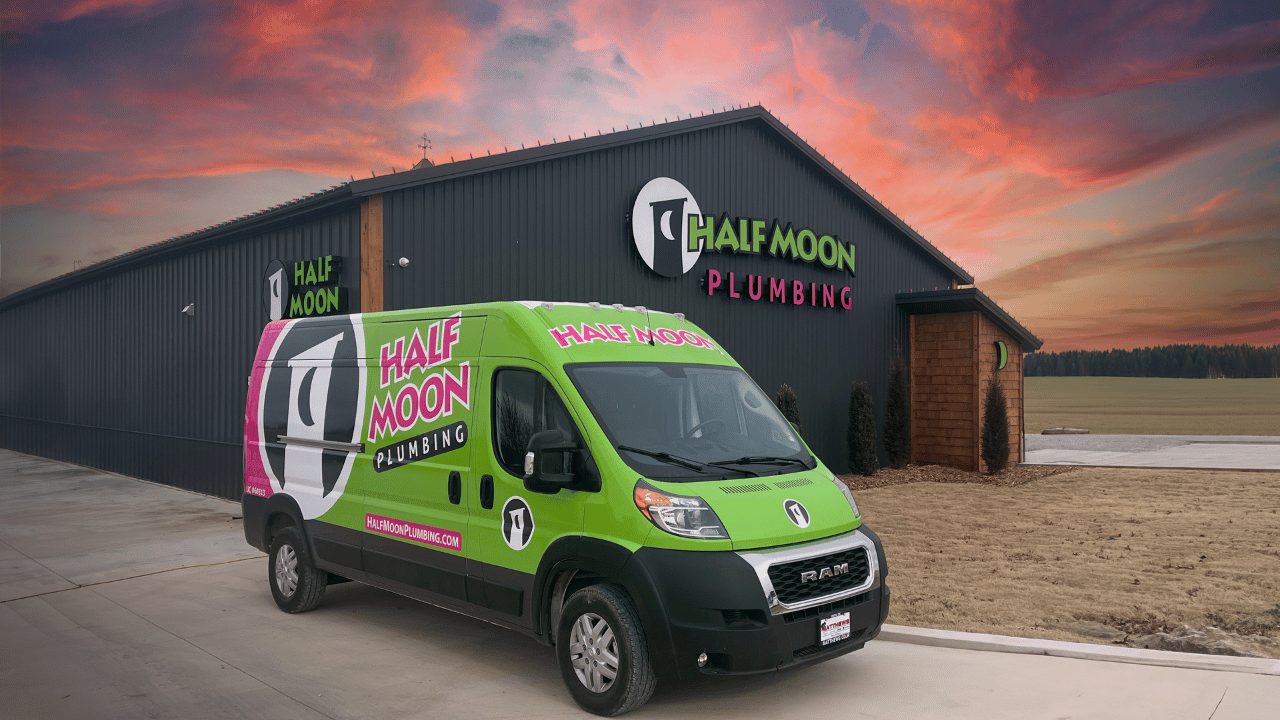
This company chose the opposite. A name that avoided the “last name plumbing” stereotype. A logo concept that people remember. Loud colors that stand out on highways and in neighborhoods. Pink and green became the signature around 2012 or 2013, and it created instant recognition in a sea of sameness.
The brand was not just visual. It signaled something deeper: professionalism, friendliness, and a clear break from the typical “beat-up van” expectation.
If you want business growth, your marketing cannot look like everyone else’s. Being “professional” is not the goal. Being memorable is.
The hiring bottleneck that chokes growth
For years, hiring was painfully slow. Early hires came from newspaper ads. There was no obsession with scaling, because the initial goal was to pay off the house. Later, when the business shifted toward service work, the expectation was that talented people would flood in.
They did not.
The biggest choke point was a belief that scaling required journeyman plumbers. That creates a brutal math problem: it takes years for someone to become eligible, and it is hard to pull licensed talent from competitors. Cold calls, emails, and outreach to license holders still did not solve the shortage.
If your growth depends on rare talent that the market does not have enough of, your business is not scalable. It is fragile.
The scaling unlock: stop chasing talent, start building it
A mindset shift happened when it became obvious that many larger service companies were running trucks without relying strictly on the ideal licensing path. The result was a new approach: build technicians internally.
At first, this was slow and messy. Training feels expensive. It feels like overhead. It feels risky because it requires pulling resources off revenue work to develop people. But successful companies across the country were already proving the model: internal training “universities” that produce reliable technicians.
A dedicated training space was created around 2020, and early training was primitive but consistent. Then the flywheel hit in 2022. Revenue jumped from $3M in 2022 to over $11M by the end of 2025.
If you want to know how to boost business growth, build a people pipeline. Recruiting alone is not a strategy. Training is.
Culture that actually sticks because it is practiced
Most businesses claim they have core values. Few can explain them without reading a poster.
Here, the mission and values were built early and reinforced weekly for more than a decade. The mission focused on excellence through manners, methods, and materials. Customer service mattered. Craftsmanship mattered. Quality materials mattered. The standard was not “meet code” because code sets a low bar.
Values were not treated like a branding exercise. They were repeated every Monday morning, discussed with real examples, and used as a filter for behavior. There was even a rule: no plumbing talk from six to six-thirty. Culture first, then work.
Fast growth breaks weak culture. Strong culture makes growth survivable, repeatable, and easier to lead.
The pressure behind business growth is real
High growth does not just stress a business. It stresses a home. This story includes the reality of parenting, a child with special needs, long seasons of mental load, and the truth that “balance” is not an on and off switch.
Two tactics helped: clear communication and intentional boundaries. A simple rule like “no business talk on Sundays” was used to protect family time. Extra help at home reduced the mental burden and made it possible to stay present when it mattered.
If you grow the business but lose your marriage or sanity, you did not win. Build boundaries and communication early, not after burnout.
The big takeaway: hard work is required, but it is not the separator
Hard work is the entry fee. It is not the advantage.
The real separator is strategy. That means becoming intentional. Setting real goals. Building training systems. Developing business skills beyond the trade. Creating a culture that people can live inside. And showing up with consistency long enough for the flywheel to start turning.
This is what business growth looks like when it is earned.
Want a plan that actually boosts business growth?
If you are tired of guessing and you want a clear plan for business growth, including how to boost business growth with a strategy that fits your market, let’s talk.
